
Vehicle reference
Confirm model, year, VIN, market and current cabin condition.
Vehicle and current cabin
Materials, colour and surface
Interfaces, structures and fitment
Upholstery, trim and assembly
Install, QC and dispatch
Inside OWNSILENT production
A complete interior conversion begins with physical references, organized vehicle-specific components and a confirmed design specification. This project record follows those preparation stages before detailed upholstery manufacturing.
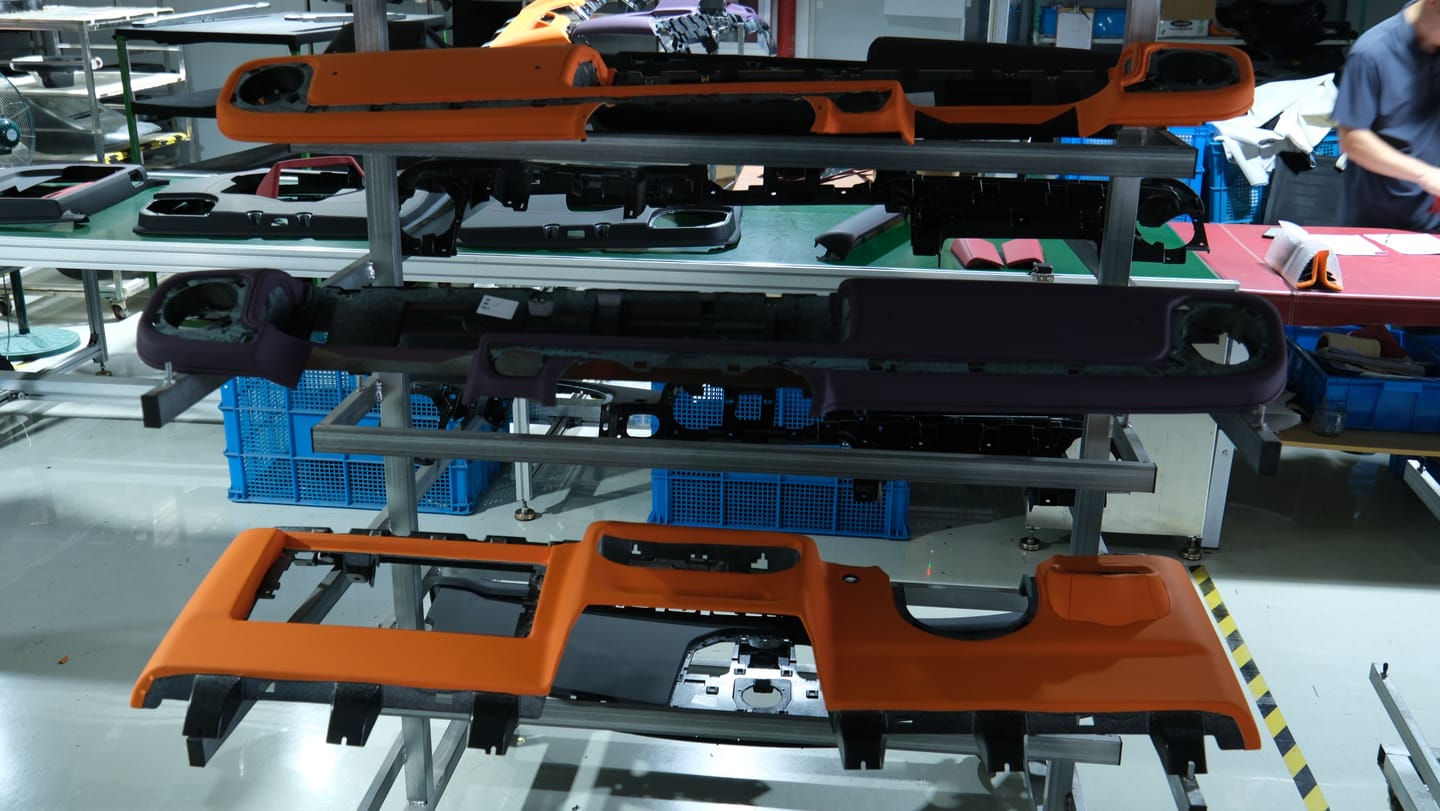
Several colour directions are visible together, demonstrating how related panels are organized without treating them as one fixed specification.
Confirm model, year, VIN, market and current cabin condition.
Define the coordinated seats, panels, steering and supporting trim pieces.
Record approved colour, surface, perforation, stitching and application.
Review component organization and visible finish before the next stage.
Stage 01 · Physical references
Physical samples and templates provide the visible reference for colour direction, surface character and section geometry. Exact material grade and origin remain subject to written approval.

A single physical reference supports review of tone and visible surface consistency before the component specification is approved.

Adjacent references allow colour and surface character to be compared under the same production-house lighting.

Multiple physical references help establish the approved cabin palette before coordinated panels and seating components enter production.
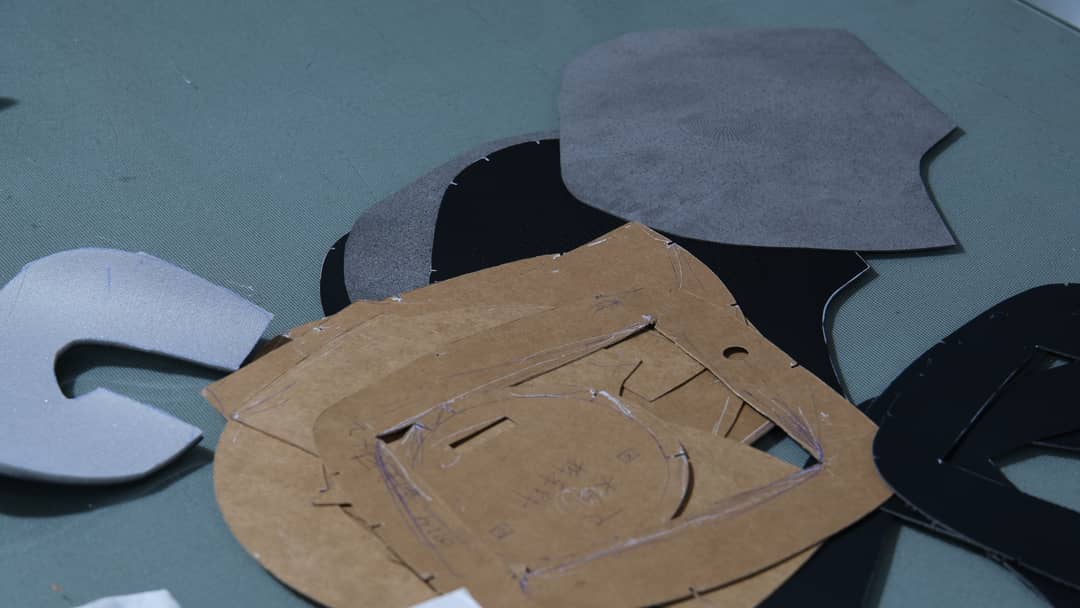
Physical templates translate a component design into separate covering sections while preserving the intended shapes and joins.
Stage 02 · Production house
Prepared panels are separated on production racks so related pieces remain accessible for inspection, sequencing and controlled transfer through the workshop.
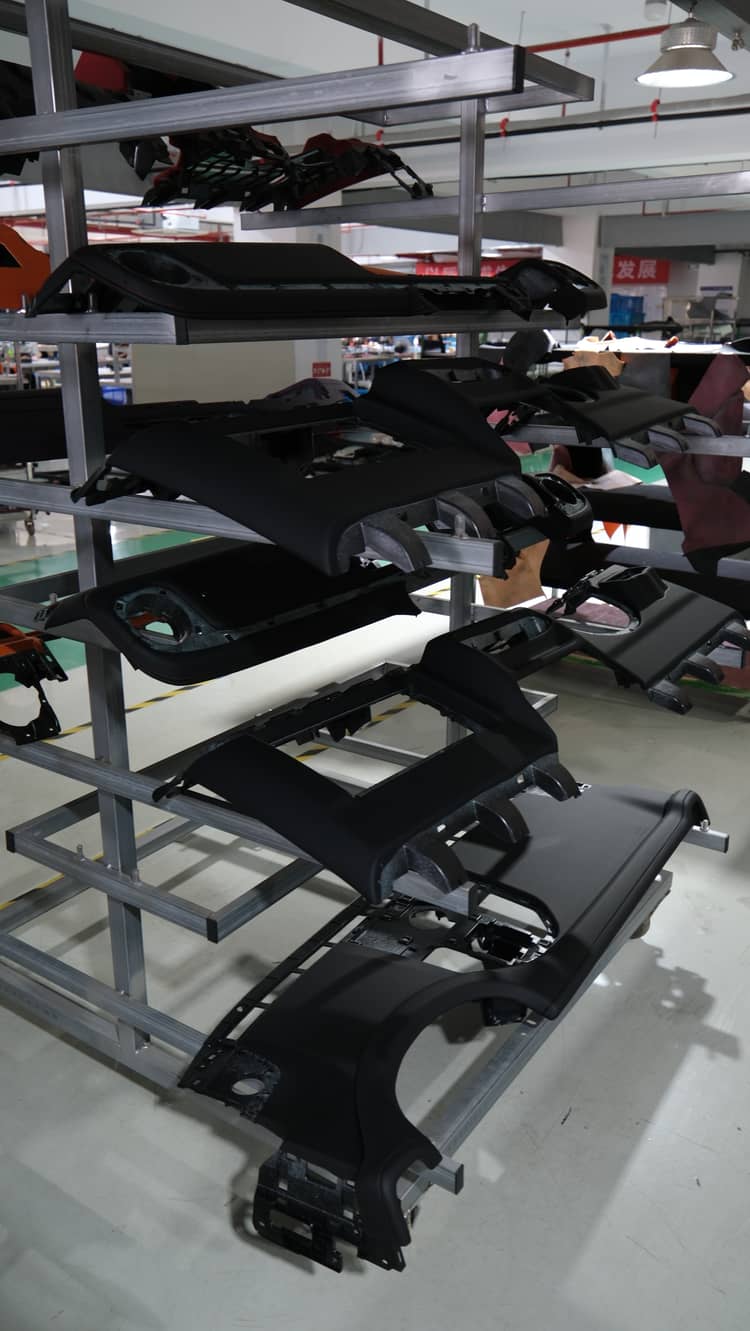
Dedicated racks keep shaped parts separated, visible and organized as coordinated sets while they move through production.
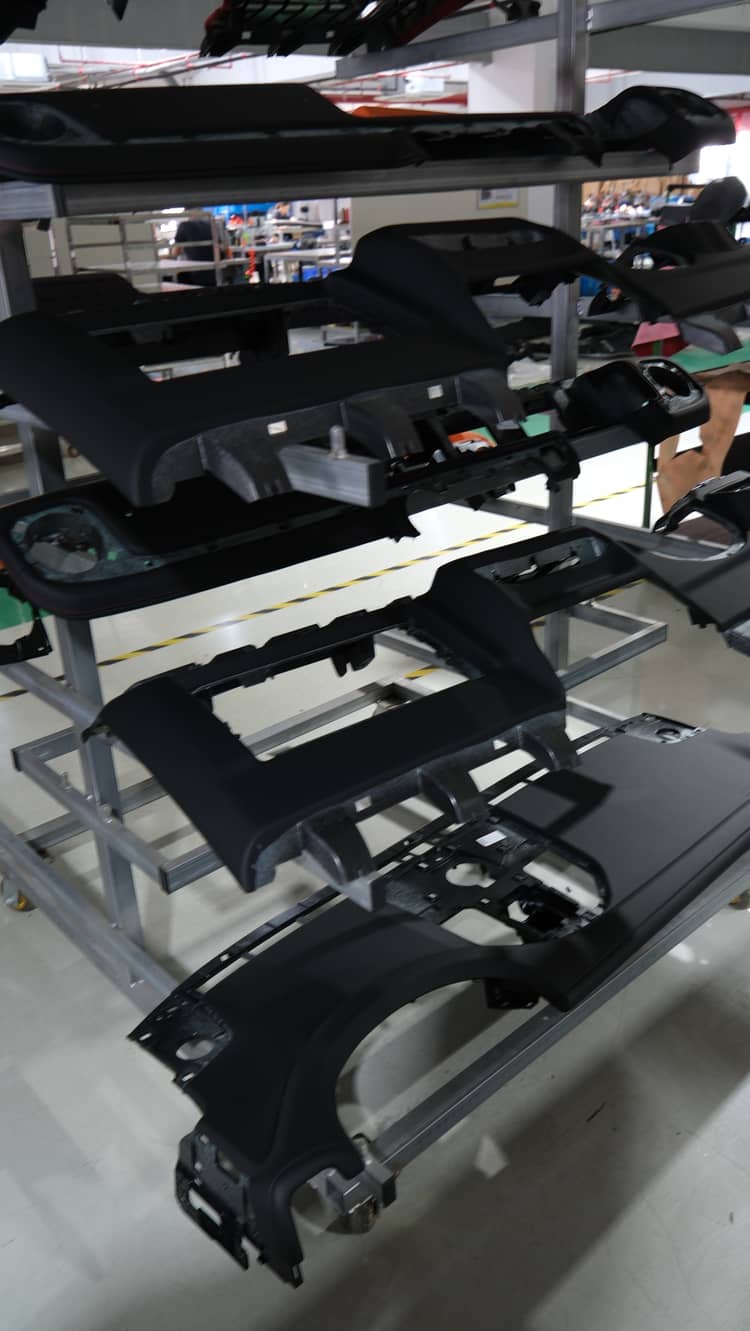
The wider rack view documents several prepared components being held for inspection and the next assembly stage.
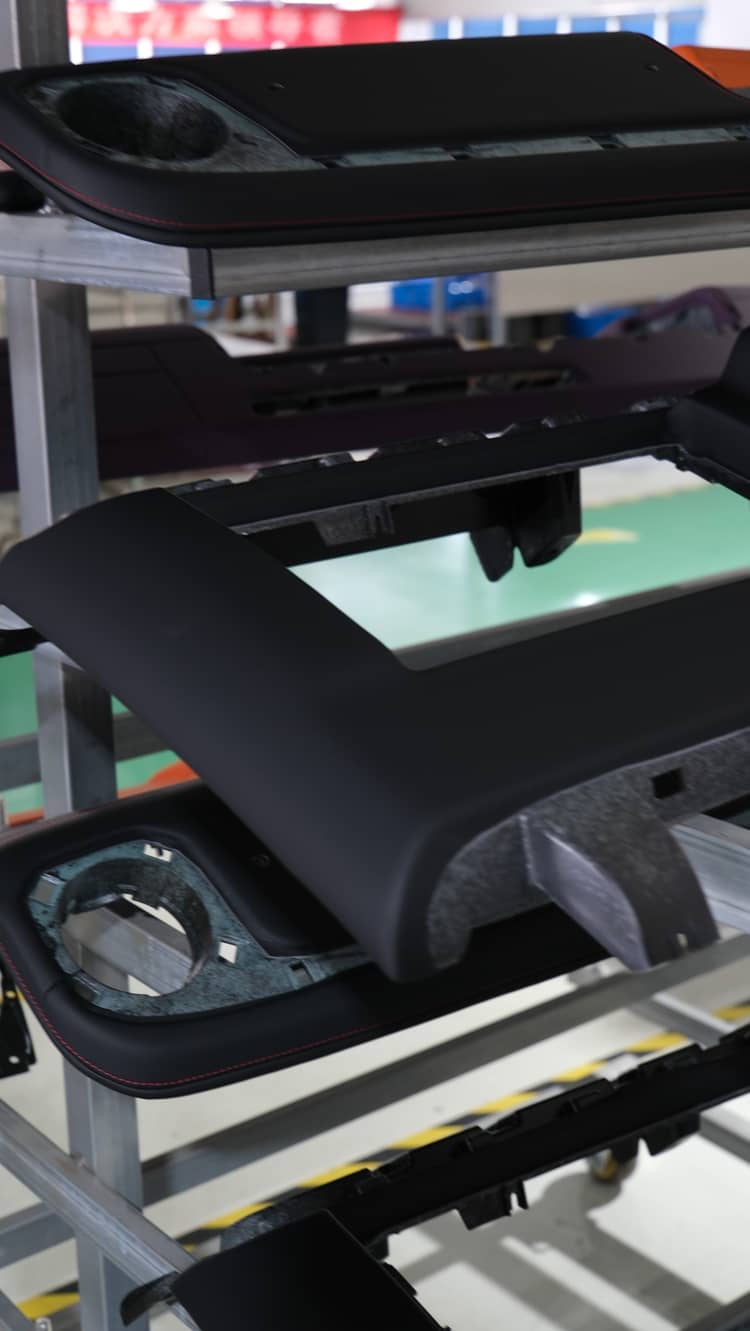
Related panels can be checked together for surface consistency, openings and component-set completeness before further work.
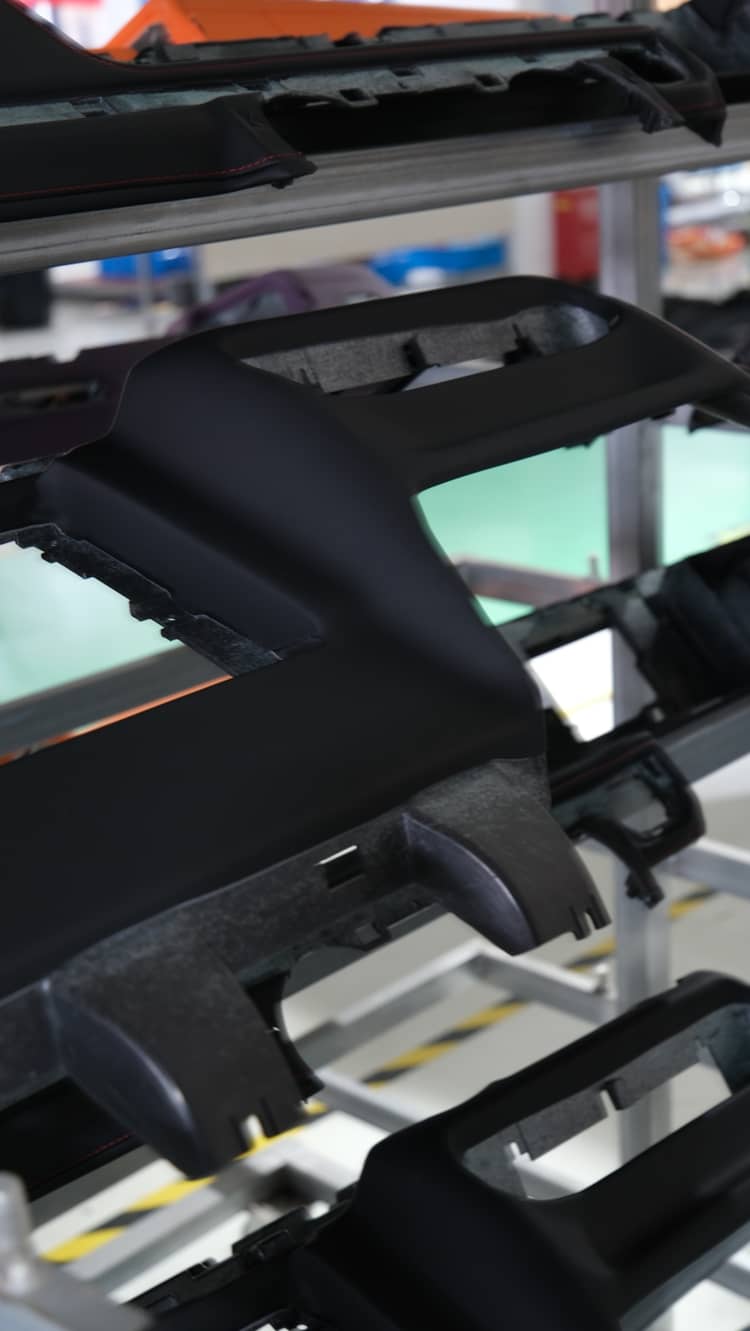
Visible apertures show where retained switches, handles and adjoining hardware must remain accessible within the finished assembly.
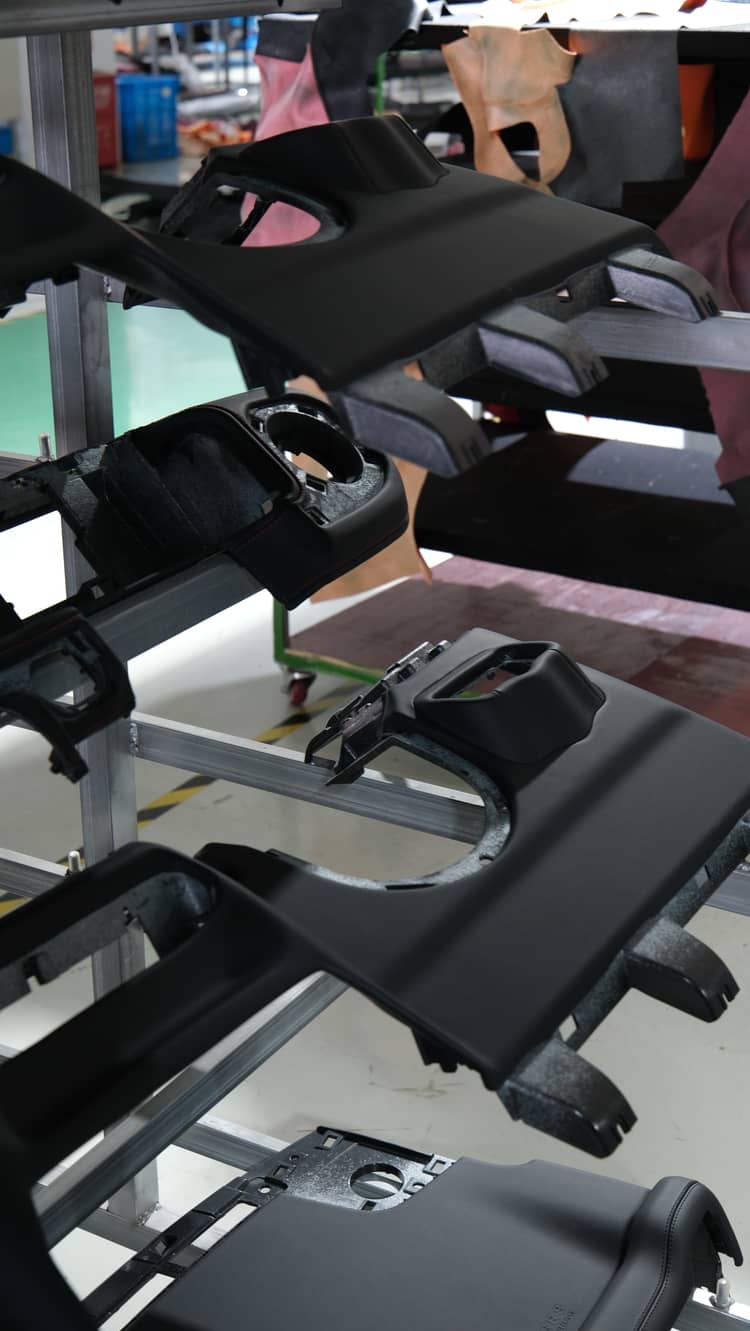
The workshop arrangement provides a practical checkpoint for reviewing related pieces before they progress as a vehicle-specific set.

A supported panel remains accessible from multiple sides while its visible surface, openings and perimeter alignment are reviewed.
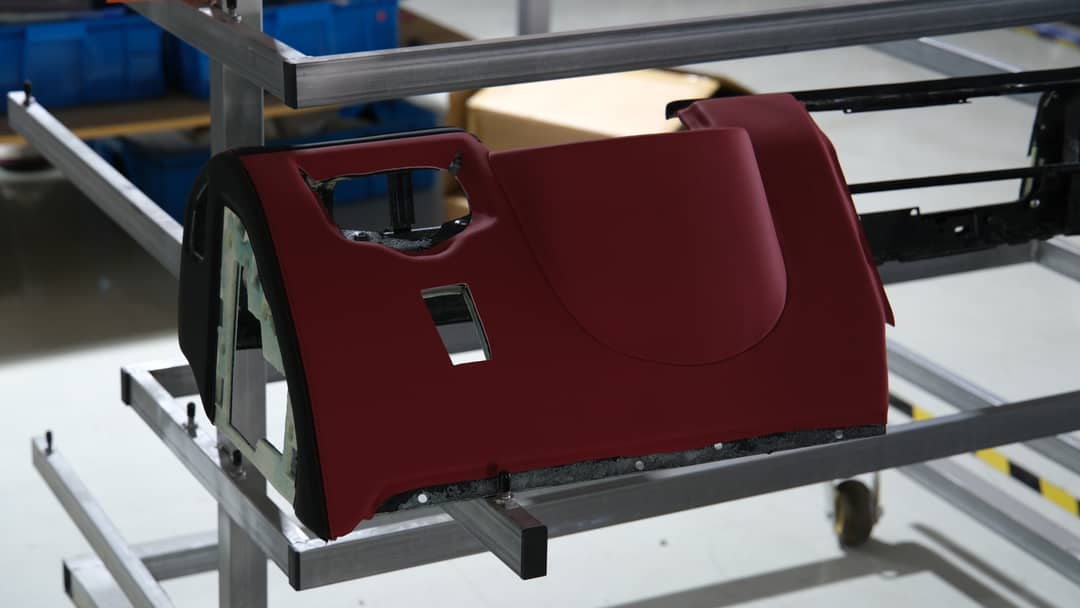
The full component view records the coloured insert, dark surrounding structure and retained openings before vehicle installation.
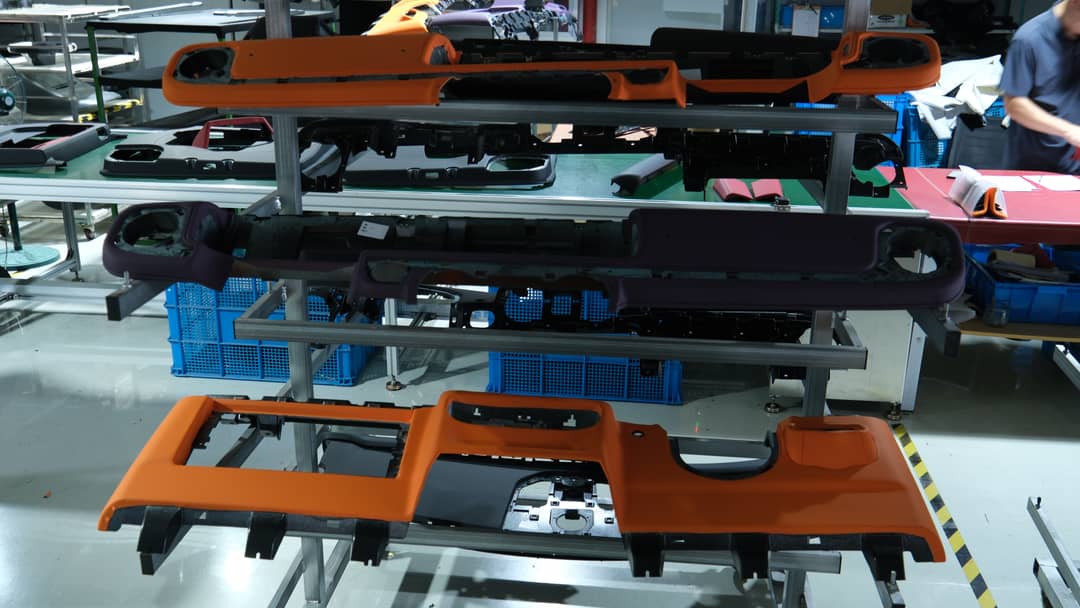
Several colour directions are visible together, demonstrating how related panels are organized without treating them as one fixed specification.
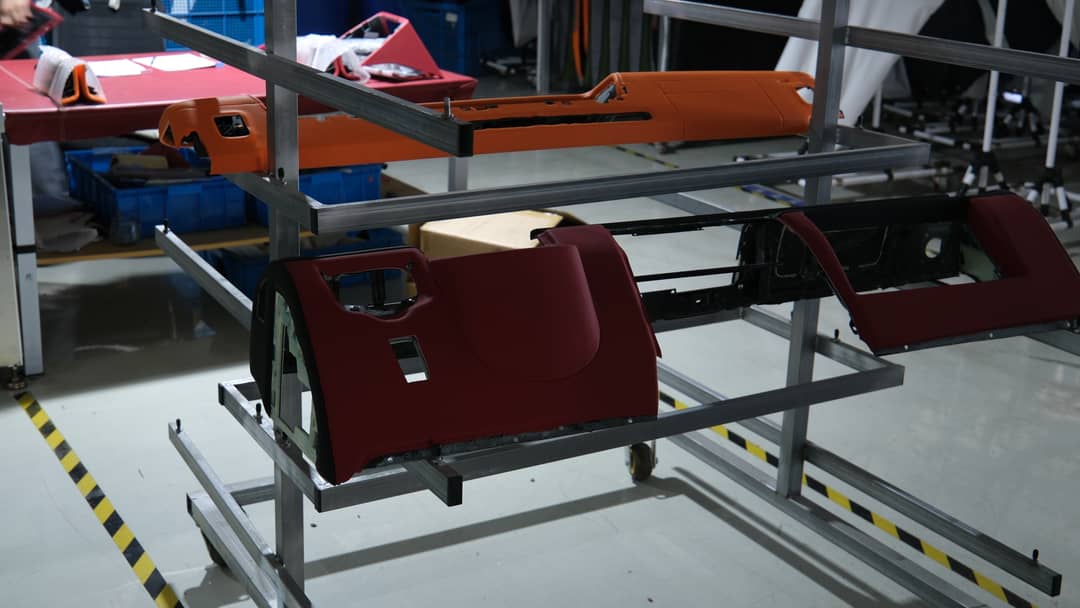
The paired arrangement makes colour continuity, panel proportions and visible component openings easier to compare before fitment.
Stage 03 · Component planning
Frames, reverse-side interfaces and supporting trim pieces are examined as part of a coordinated interior system before upholstery assembly and vehicle fitment.
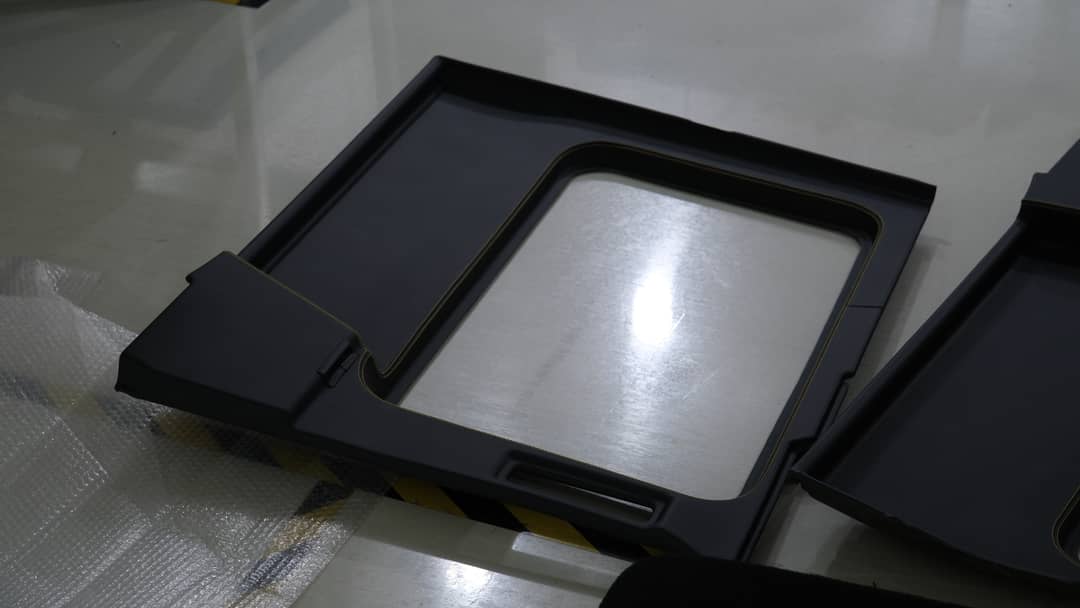
Matching frame components are grouped so their shape, surface and large central openings can be inspected as a pair.
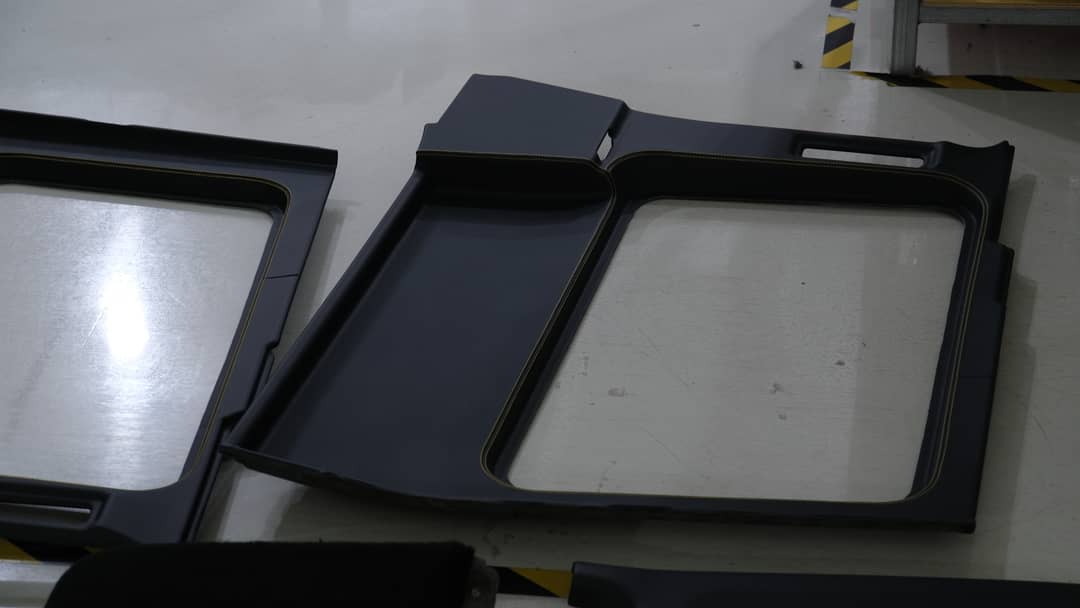
Side-by-side positioning supports a direct comparison of matching geometry and visible surface treatment before assembly.
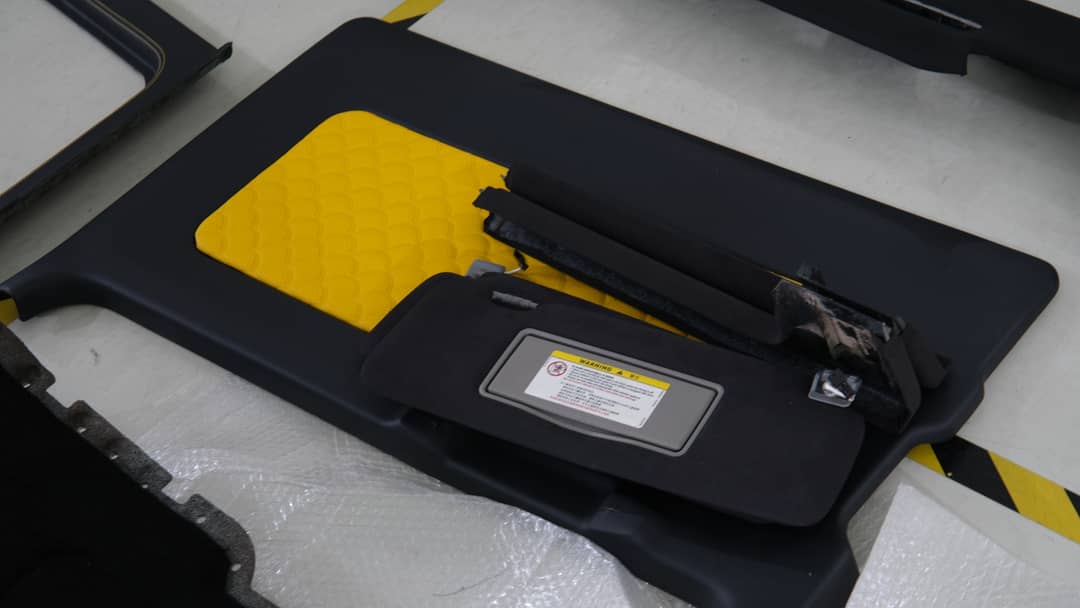
The reverse view identifies hidden wiring and mounting areas that must remain accessible throughout upholstery and final assembly.

The complete layout helps verify the presence and visual coordination of multiple pieces before they leave the preparation stage.
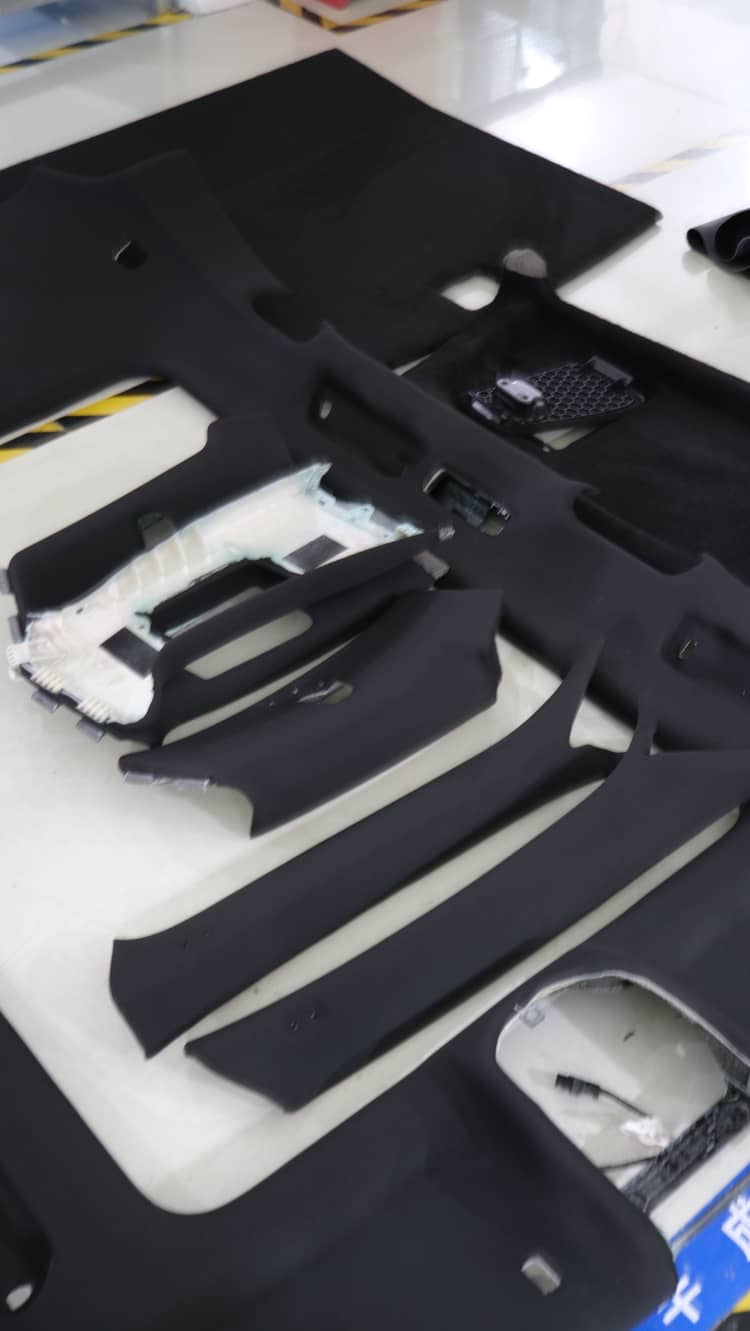
Narrow and larger parts are reviewed together to confirm their visible finish and place within the broader component system.
Continue through the conversion system
Continue into covering, stitching and edge-finishing work across shaped steering and smaller cabin components.
No. Component scope is confirmed for the exact vehicle, approved design and requested areas before production.
No. They represent previous physical samples and project configurations. Current availability and exact colour must be confirmed.
No. Exact leather grade, origin and application must be recorded in the written quotation and material approval sheet.
They support the engineering review of vehicle specification, component scope, interfaces and fitment requirements before an order is accepted.
Get In Touch
Send the vehicle brand, model, year, VIN, current cabin dimensions and preferred colour direction. OWNSILENT will review component scope and material specifications before production.
Usually replies within one business day · Handled by the OWNSILENT team
Prefer email? Reach us at sales@ownsilent.international